

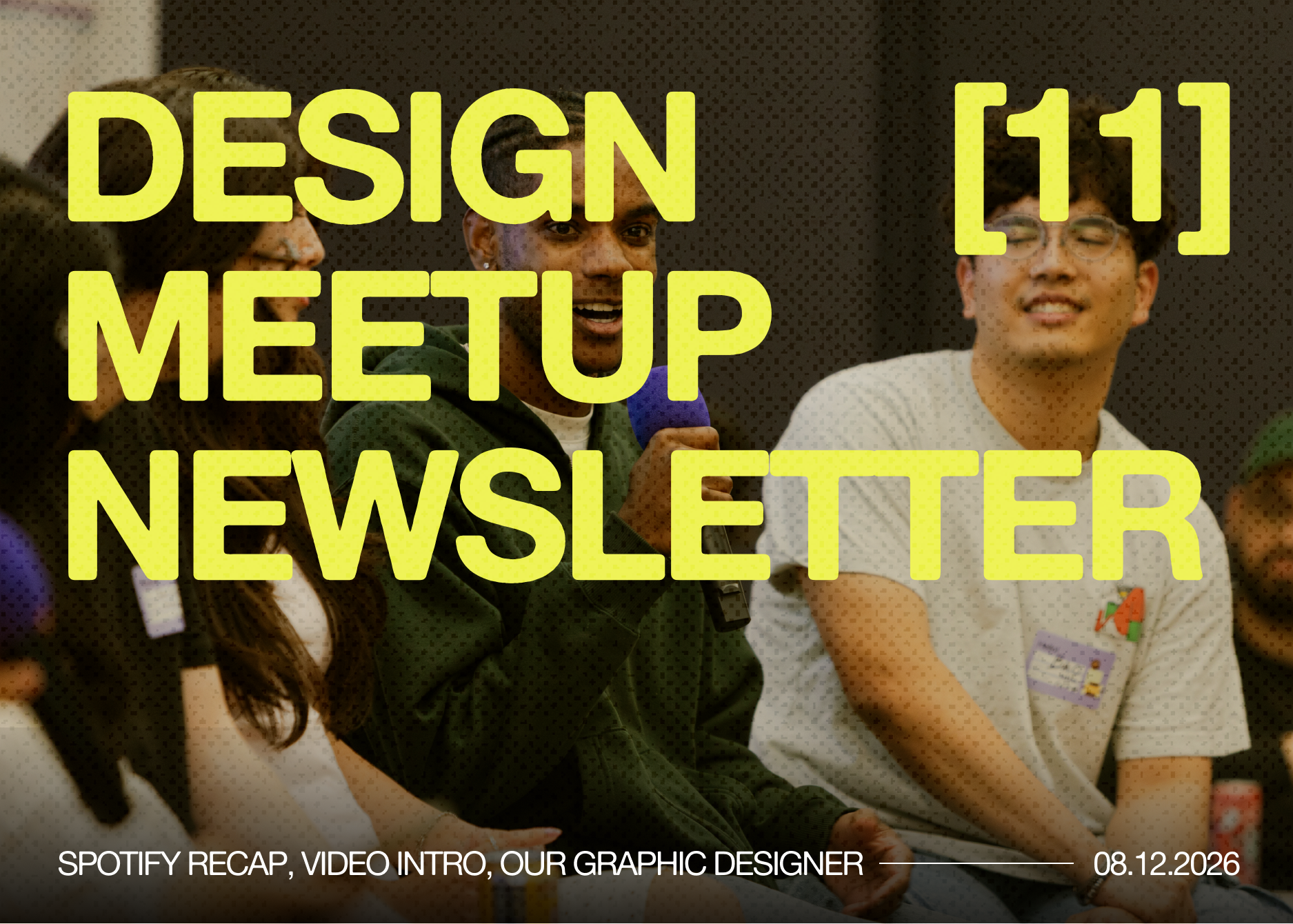
🎥 A little video about us in case you forgot…
Featured at our event with Apple at their Cupertino HQ. Recap photos coming soon!
📸 Snapshots of past events
[NYC] Spotify x Design Meetup


Special shoutout to Emily Shen and Sabria Islam for holding down the fort in NYC!
📅 What’s coming up
Make sure you’re subscribed to our Luma calendar to be the first to know of new events.
[BAY AREA] 🤫 (Hint: A lot of 🍣🍣🍣🍣)
[NYC] COMING SOON
Two quick things:
Sponsorships: If you work at a company/space where you want to host a Design Meetup event, reach out to us at contactdesignmeetup@gmail.com. We’re building out our calendar for the next 6 months and would love to collaborate.
Get Involved: We’re getting a lot of feedback that you guys want to get more involved and that’s so exciting! We’ll be opening up something special coming soon for those who want to join us.
🦄 Opportunities
These jobs were posted in the past 2 days, so they’re still fresh!
Internships
New grad roles
📝 The next five years of product design
An excerpt of Balint Bogdan’s article on Substack
Will entry-level design jobs survive, or will AI replace the tasks that juniors used to learn on?
Junior designers historically learned by doing the work nobody else wanted to do. Cleaning up Figma files. Building out component variants. Documenting spacing and color tokens. Filling in the screens between the ones the senior designer already figured out.
AI is now capable of doing most of that. And companies know it.
Scenario A: Junior hiring slows down. Companies figure they can give a senior designer AI tools and get the same output that used to require a senior plus two juniors. Entry-level roles get scarce. The people who do get hired are expected to be AI-proficient from day one and operate more like mid-level designers immediately.
Scenario B: Junior roles evolve instead of disappearing. As AI handles the production grunt work, juniors are freed up to do more interesting things earlier in their careers. More research exposure, more stakeholder interaction, more strategic work. The learning curve is steeper but the ceiling is higher. Companies that invest in junior talent early end up with stronger senior designers five years from now.
What to do about it: If you’re early in your career, don’t just learn the tools. Learn the thinking. Be the junior who can run a usability test, synthesize interview notes, and present findings to a PM, not just the one who builds clean components. Use AI to skip the blank canvas, but make sure you understand why the AI’s suggestion works or doesn’t. Build things outside of work. Show judgment, not just output. If you’re senior, think about what happens when the pipeline of junior designers dries up. Today’s juniors are tomorrow’s senior designers and design leaders. Cutting them off creates a leadership gap that’s hard to fill later.
Will “designer” stay a focused role, or will it absorb responsibilities from five other jobs?
This is already happening. Companies are expanding what they expect one designer to handle. Research, visual design, prototyping, copywriting, light front-end, data analysis, presenting to stakeholders. Roles that used to be split across a team are consolidating because AI makes one person faster at all of them.
Scenario A: The designer role expands into something closer to a product generalist. You’re expected to write your own copy, analyze your own data, prototype in code, and present to leadership. Specialists still exist in large organizations, but most companies want one person who can do all of it. The title stays “product designer” but the job description doubles.
Scenario B: The opposite happens. As AI handles surface-level work across all those domains, companies realize they need depth over breadth. Specialists in research, interaction design, content design, and design systems become more valuable because AI-generated work is decent but not deep. Generalists hit a ceiling where they’re okay at everything and great at nothing.
What to do about it: I think reality will land somewhere in the middle, which means the safest position is the T-shape. Go deep on one or two things (research and interaction design, or systems thinking and visual craft) and be competent across the rest. AI makes it easier to be competent at adjacent skills. It doesn’t make you an expert. Use AI to cover your weak spots, but invest real time in your strengths. That depth is what will be hard to replace.
🔍 Designer spotlight: Matthew Hope
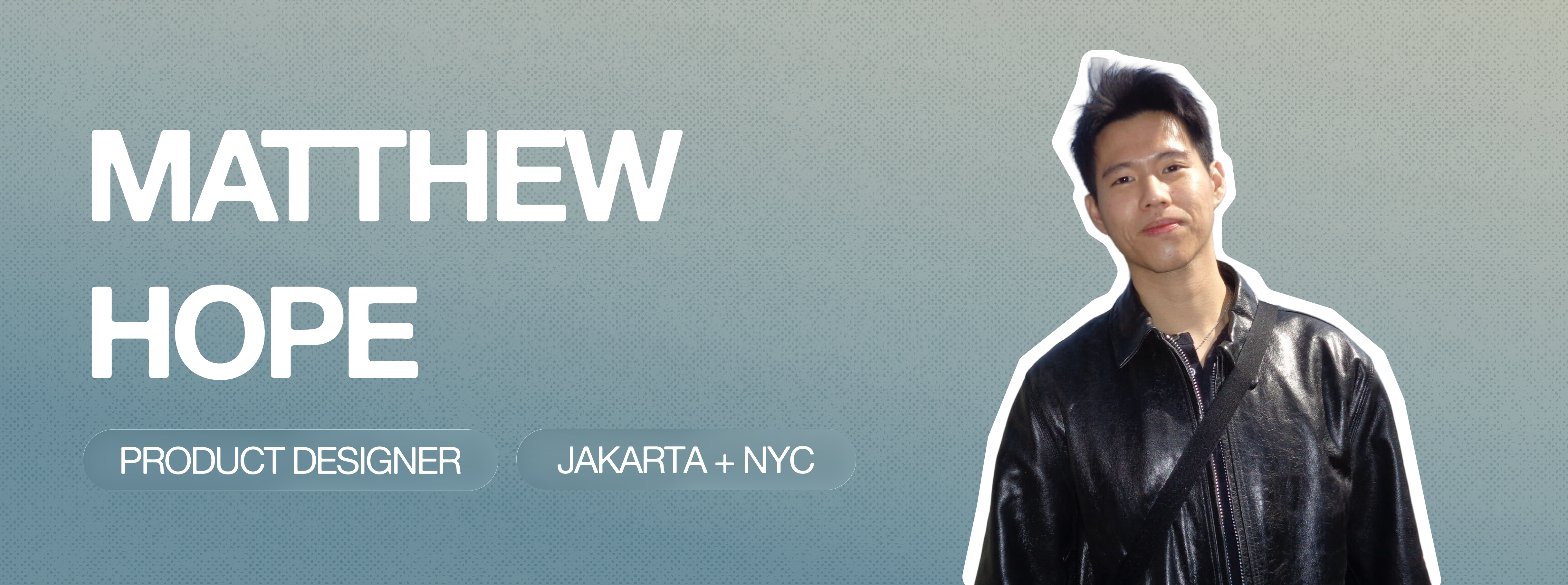
Matthew Hope, Product Design Intern @ CrowdVolt, from Jakarta, Indonesia
Favorite design tool right now?
Adobe Photoshop
Where do you draw your inspiration from as a designer?
As with any other designer, I enjoy looking at online references from sites such as Pinterest, Mobbin, Cosmos, etc. Something that I have been trying to do more intentionally is to be more aware of my surrounding as I walk around the city. Being in NYC, theres is so much direct and non-direct inspiration sources even in a short 5 minute walk. I’ve been making it a point to go on a walk mid day everyday as a way to get more inspiration or just to refresh my creativity.
What advice to early career designers do you have?
Expand your horizons! It really easy to be stuck in a singular practice, especially with external pressure of being a expert in one area, but design is all about the craft and exploration. Practice other media forms and challenge yourself with something you aren’t good at. Designers come from so many backgrounds too, so I also find myself involving myself in stuff outside design too. This really makes you a well rounded designer and also prevent burn out (in my personal experience). Also do not be shy to post your work online! Exposure is always good and it’s also awesome to just look back and see your progression.
Fill out this form if you’re interested in being featured in one of our next volumes.
🎨 Design Twitter roundup


See you soon,
Brandon + Ilyssa
is that @baothiento 👀
@hopegoestoplay 🐐